
Cooling fluid emissions: Hazards, limit values and effective extraction solutions
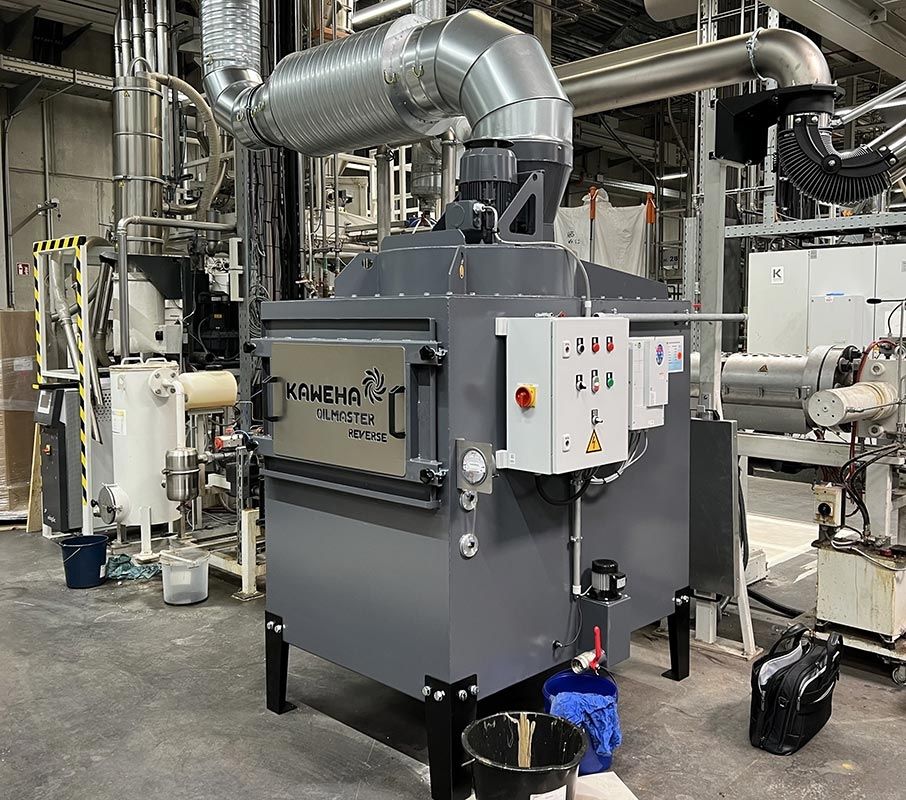
During machining, cooling lubricants emit fine aerosols and vapors into the workplace air. These emissions are caused by high tool speeds and machining temperatures, which break the coolant mixture down into airborne particles.
The concentration of oil mist and emulsion mist in the breathing air is subject to strict limits according to TRGS 611 (Technical Rules for Hazardous Substances) and DGUV Rule 109-003. Without suitable extraction technology, cooling lubricant aerosols endanger the health of employees through respiratory diseases, skin irritations and long-term organ damage.
What are cooling lubricants and why do emissions occur?
Cooling lubricants in machine tools are responsible for heat dissipation and lubrication during processes such as milling, turning, and drilling. The cooling lubricant is applied directly to the interface between the tool and the workpiece to reduce friction and lower temperatures. In addition to their cooling function, cooling lubricants improve the surface finish of the material and extend the service life of the machining tools. The cooling lubricant emulsion binds any dust generated and ensures reliable chip removal from the workpiece.
The industry distinguishes between water-miscible and non-water-miscible cooling lubricants.
Non-water-miscible cooling lubricants are mostly based on mineral oils or synthetic oils with high lubricating properties.
Water-miscible cooling lubricants contain emulsifiers and additives for improved corrosion protection. Both types of cooling lubricants release harmful aerosols into the work area through evaporation and mechanical atomization.
Health hazards from metalworking fluid emissions
Vapors and aerosols from metalworking fluids are demonstrably hazardous to health and can contribute to occupational diseases. These fluid aerosols are absorbed through skin and eye contact, as well as by inhaling contaminated air. Water-miscible metalworking fluids are also susceptible to microbial contamination, which can cause respiratory problems and skin irritation in employees. Long-term exposure to oil and emulsion mist significantly increases the risk of chronic respiratory and skin diseases.
Improper disposal of oil- and coolant-containing chips leads to soil and water pollution. Used coolants are considered hazardous waste and must never be disposed of in the sewer system.
Limit values and regulations for occupational safety
TRGS 611 specifies binding requirements for water-miscible metalworking fluids. The nitrite content in used metalworking fluid must not exceed 20 mg/l to prevent the formation of carcinogenic N-nitrosamines. The pH value of the metalworking fluid must be checked weekly, as low values promote nitrosamine formation.
A sustained pH drop of more than 0.5 points compared to the freshly mixed coolant requires countermeasures such as partial replacement or consultation with the coolant manufacturer. All measured values must be documented in accordance with TRGS 611 and DGUV Regulation 109-003 and stored for at least three years.
DGUV Regulation 109-003 specifies protective measures for work involving metalworking fluids. According to current best practices, target values of 10 mg/m³ for the sum of aerosol and vapor in the breathing air apply to water-miscible metalworking fluids used in metalworking. Regular measurement of parameters such as nitrite content, pH value, concentration, and microbial contamination is among the employer's responsibilities.
Basic measures for emission reduction
Before implementing air handling measures, companies first examine fundamental steps to reduce coolant emissions. Optimizing the coolant flow rate reduces unnecessary evaporation. The coolant should reach the point of contact directly and evenly to minimize friction and ensure heat dissipation. A tightly sealed enclosure for the system and the installation of splash guards limit the spread of coolant aerosols.
Leaks in cooling lubricant systems must be sealed immediately. Chips and workpieces should only be stored in the work area for short periods. Spilled or splashed cooling lubricants should be removed immediately with a wet vacuum or absorbent material. All collection and drainage points should be kept closed whenever possible; sealable containers should be used to collect contaminated cleaning cloths.
Air handling measures and extraction systems
If basic measures are insufficient, air handling measures are implemented. Cooling lubricant emissions must be extracted at their source and outlet using capture devices. The suitability of oil mist separators and aerosol filters for cooling lubricant emissions should be tested beforehand to ensure their effectiveness.
Technical extraction systems significantly improve air quality in the workplace. Specialized separation systems are used for oil mist extraction, efficiently filtering aerosols from the air. Coordination between machine design and air handling technology is crucial. Capture devices for coolant emissions should be considered as early as the machine design stage.
VDI guideline 3802, part 2 (Association of German Engineers) recommends a maximum air velocity of 4 m/s in the collection cross-section. This limit prevents larger droplets or chips from being drawn in. Returning separated substances to the cooling lubricant circuit is only permitted if no additional hazard arises from changes in composition or microbial contamination.
Detection devices for various applications
According to VDI guidelines, a distinction is made between closed, semi-open, and open capture systems for cooling fluid emissions. Closed systems, such as encapsulation and enclosures, offer the highest level of protection with the lowest capture airflow. Semi-open designs are used when loading or operating openings are necessary.
When selecting extraction systems, planners consider the dispersion of substances due to thermal effects, pressure differences, and moving machine parts. Pipelines for coolant extraction run with a downward slope towards the emission source to prevent the accumulation of liquid coolants. The flow velocity in the extraction lines should be at least 20 m/s to prevent deposits and contamination in the pipe system.
In addition to coolant emissions, other air pollutants develop in manufacturing due to a wide variety of processes.
KAWEHA develops customized extraction systems for every application. The product range extends from standardized solutions to ATEX-certified special designs (explosion protection according to EU Directive 2014/34/EU) for potentially explosive atmospheres.
Effectively reduce coolant emissions – with KAWEHA extraction technology
Metalworking fluid (MWF) emissions require a tiered approach encompassing basic measures and ventilation systems. Compliance with workplace exposure limits according to TRGS and DGUV regulations provides lasting protection for employee health. KAWEHA oil mist separators capture aerosols and vapors directly at the source, preventing MWF emissions from spreading throughout the work area.
For large production lines, the stationary Oilmaster OM R is ideal, with airflow rates up to 100,000 m³/h. The mobile Oilmaster Mini R ST/M, with an extraction capacity of 600 to 1,500 m³/h, is well-suited for CNC machines and changing workstations. Thanks to its 3-stage filtration system, both systems remove over 99.99% of pollutants from the air.
Get a free consultation now. Our experts will guide you from the initial consultation and planning stages right through to commissioning. Together, we'll find the optimal extraction solution for your business.
January 26, 2026
