
Dust control in quarries: Risks and solutions
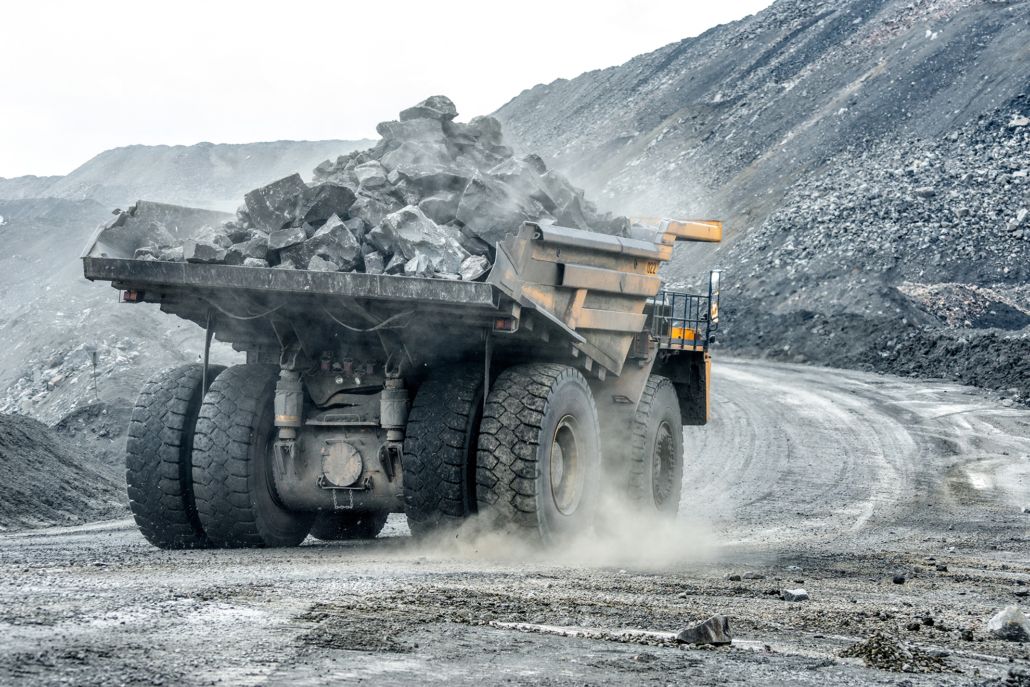
Dust in quarries is primarily generated by mechanical crushing, weathering, and material transport. Blasting, drilling, and excavation release coarse and fine particles, while crushers, screening plants, and conveyor belts emit ultrafine dusts such as respirable crystalline silica (RCS) with particle sizes below 10 µm.
In addition, truck movements on unpaved roads and open loading areas cause significant dust disturbances, while unprotected heaps further contribute to the spread of fine dust through wind erosion.
These emissions not only pose a health risk to workers, but also affect the environment and local residents. To minimize this impact, modern dust control measures and legal regulations are employed, specifically targeting dust reduction in the individual process stages of rock extraction and processing.
What is rock dust?
Rock dust is a conglomerate of finely ground minerals and rock particles, formed by natural weathering or industrial processes such as mining and rock processing. Rock dust often consists of silicates like quartz, as well as mineral components such as limestone, dolomite, or clay shale, and may also contain trace amounts of heavy metals like nickel or chromium.
The particle sizes vary from fine dust (<1 µm) to coarse dust (up to 500 µm), with respirable fractions below 10 µm considered particularly relevant to health.
Natural sources of rock dust include atmospheric erosion by wind and water, volcanic activity, or transcontinental dust transports such as Saharan dust in Europe.
Industrial processes that generate rock dust include mechanical processing of rock through blasting, drilling, breaking or milling, as well as construction-induced emissions from concrete processing and other abrasive activities.
Health risks of rock dust
Rock dust poses significant health risks, particularly through the inhalation of fine particles that can penetrate deep into the respiratory tract and cause long-term damage. Respirable crystalline silica dust (RCS), released during the processing of mineral materials such as granite, sandstone, or engineered stone, is especially dangerous. The main health hazards of rock dust include:
- Silicosis (dust lung)
- Lung cancer
- Chronic obstructive pulmonary disease (COPD)
- Cardiovascular diseases
- Kidney damage and autoimmune diseases
- Silicosis (dust lung):
This chronic lung disease is caused by the deposition of quartz particles (<10 µm) in the lung tissue, leading to irreversible scarring. Affected individuals often only experience symptoms such as shortness of breath, chronic cough, and weight loss after decades. - RCS dust
is classified as a Group 1 carcinogen by IARC, meaning it has a direct link to lung cancer. Studies show up to a 50% increased risk of developing the disease with long-term exposure, particularly in occupations with high dust levels. - Chronic obstructive pulmonary disease (COPD):
Exposure to fine particulate matter can cause persistent inflammation of the airways, significantly impairing lung function. Measurements show reduced forced vital capacity (FVC) in occupational groups exposed to these pollutants compared to control groups. - Cardiovascular diseases:
Ultrafine particles (PM₂,₅) from rock dust enter the bloodstream and increase the risk of arterial inflammation, high blood pressure, heart attacks and strokes. - Kidney damage and autoimmune diseases:
Long-term exposure can affect not only the lungs but also other organ systems. Studies show links between particulate matter pollution and kidney damage, as well as autoimmune diseases such as scleroderma.
risk groups
Occupational groups particularly at risk include construction workers, stonemasons, miners, and tile setters, who regularly work with stone processing techniques such as dry cutting, drilling, and grinding without dust extraction. Particle size determines how deeply the dust penetrates the body: PM₁₀ reaches the bronchi, PM₂₅ the alveoli, while ultrafine dust (<0.1 µm) can even enter the bloodstream and brain.
| Particle size (PM) | Size (µm) | Site of action |
|---|---|---|
| PM₁₀ | ≤10 | bronchi |
| PM₂,₅ | ≤2.5 | Lung air sacs (alveoli) |
| ultrafine dust | <0.1 | Blood circulation/brain |
Environmental impacts of rock dust
Rock dust impacts the environment in a variety of ways, from potential climate benefits to significant ecological risks due to uncontrolled emissions. While certain applications are specifically used for CO₂ sequestration, particulate matter pollution, soil alteration, and heavy metals lead to long-term environmental damage.
Positive environmental impacts of rock dust
The positive environmental impacts of rock dust include:
- CO₂ sequestration through Enhanced Rock Weathering (ERW)
- Nutrient enrichment in soils
- CO₂ sequestration through Enhanced Rock Weathering (ERW):
Certain rock types, such as basalt or volcanic material, can form carbonates through chemical weathering, thus sequestering billions of tons of CO₂ annually. Particularly in tropical regions, this process promotes soil fertility and supports plant growth, thereby enabling additional carbon storage in biomass. - Nutrient enrichment in soils:
Agricultural field trials show that rock dust releases nutrients such as calcium and magnesium, which can lead to higher crop yields. In acidic soils, it contributes to stabilizing the pH value and improves soil structure.
Negative environmental impacts of rock dust
The negative environmental impacts of rock dust include:
- Air pollution and health risks
- Ecosystem pollution from dust deposits
- Soil changes and heavy metal release
- CO₂ balance due to transport emissions
- Air pollution and health risks:
Fine particulate matter (PM₂₅/PM₁₀) from quarries and industrial processes impairs air quality and increases the risk of respiratory diseases such as asthma, bronchitis, and silicosis. Quartz and asbestos dust, in particular, are classified as carcinogenic (IARC Group 1). - Ecosystem pollution from dust deposits:
Fine dust particles settle on plant leaves, thereby restricting photosynthesis. At the same time, heavy metals such as lead or mercury can contaminate soils and water, which in the long term impairs the food chain. - Soil alterations and heavy metal release:
While basalt dust can have positive effects in acidic soils, it leads to an undesirable increase in pH value in alkaline regions. Furthermore, toxic metals such as nickel or chromium, which are contained in certain rocks, can be absorbed by plants and thus enter the food chain. - CO₂ balance due to transport emissions:
Although Enhanced Rock Weathering can potentially sequester large amounts of CO₂, the transport of rock dust by truck or plane generates significant emissions. These can negate up to 50% of the CO₂ savings, meaning that ERW's climate impact is heavily dependent on logistics.
Why water pressure misting is insufficient in quarries
Water pressure spraying alone is insufficient to effectively control dust levels in quarries, as technical, environmental, and physical limitations restrict its effectiveness. While it can bind larger dust particles, its efficiency with fine dust and ultrafine particles remains low.
The main reasons for the limited effectiveness of water pressure misting in quarries are:
- Inefficient droplet size distribution
- High water consumption and undesirable side effects
- Weather dependency and limited control
- Limited effect on fine dust and harmful particles
- Inefficient droplet size distribution:
The size of the water droplets significantly influences dust binding. Droplets that are too large (>100 µm) either miss fine dust particles or merely deflect them, while droplets that are too small (<50 µm) are blown away by the wind and do not reach the dust source. An optimal droplet size (50–100 µm) requires precise high-pressure systems, which are not adequately calibrated in many quarries. - High water consumption and undesirable side effects:
Conventional spraying systems require up to 500 gallons of water per minute, leading to sludge formation, erosion, and increased pumping requirements. Furthermore, moisture on rock piles and conveyor belts impairs material processing and storage logistics. The associated operating costs increase significantly due to the need for dewatering infrastructure. - Weather dependency and limited control:
Wind reduces the range of the spray mist and further disperses dust particles uncontrollably, while high temperatures increase the evaporation rate and render the misting ineffective. Rain often leads to the automatic shutdown of the systems, making effective control impossible in the event of sudden dust spikes. - Limited effect on fine dust and harmful particles:
Fine dust particles (PM₂,₅) and ultrafine dust (<2.5 µm) can hardly be bound by water pressure fogging due to their low mass. The dispersal of respirable crystalline silica (RCS) is particularly critical, as it remains in the air despite intensive humidification and poses health risks.
What technical alternatives are there for dust removal?
Several technical alternatives are available for effective dust removal in quarries, offering improved dust binding and lower water consumption compared to conventional water pressure spraying. These methods specifically utilize physical, chemical, and mechanical principles to minimize dust emissions at the source.
Technical alternatives for dust removal in quarries include:
- High-pressure spray with additives
- Foam systems
- Dry extraction
- Combined hybrid systems
- High-pressure mist with additives:
Through chemical activation of the droplet surface, fine dust particles (PM₁₀/PM₂,₅) are bound more effectively than with pure water. This significantly improves dust reduction, especially for respirable particles that are difficult to control. - Foam systems:
This method reduces water consumption by up to 90% and prevents unwanted dampening of rock material or conveyor belts. The foam forms a stable layer over dust sources and prevents fine particles from being stirred up. - Dry dust extraction
captures dust directly at the emission source, such as crushers or screening plants, and separates it in filter systems. This technology prevents the distribution of dust particles into the ambient air and enables targeted disposal. - Combined hybrid systems:
The integration of fog cannons, enclosures, and AI-controlled systems enables dynamic adaptation to weather conditions and operational processes. This combination optimizes dust control while simultaneously reducing energy and water consumption.
How does a modern crusher extraction system work?
A modern crusher extraction system works by capturing and filtering dust-laden air directly at the source, such as crusher inlets and conveyor belts. High-performance fans create a negative pressure that draws particles through a piping system and separates them in filter units such as HEPA H14 or cartridge filters, removing up to 99.99% of the fine dust particles.
Automatic cleaning systems prevent filter clogging and ensure consistent extraction performance. Additionally, high-pressure mist cannons or foam systems are used to bind fine dust directly at the source and further reduce emissions.
Which filters are suitable for dust removal in quarries?
Bag filters, cartridge filters, electrostatic filters and wet filters are suitable for dust removal in quarries, depending on the type of dust and operating conditions.
Bag filters with special membranes or polyester fabric achieve high separation rates for coarse and fine dusts (PM₁₀/PM₂,₅) and are used in crushers, screening plants, and conveying transitions. Cartridge filters with an optimized pleated structure are particularly suitable for fine dust (PM₂,₅) and abrasive particles because they allow for low pressure loss.
Electrostatic filters use electrical charge to efficiently bind ultrafine particles below 1 µm from the air and are particularly designed for transfer points of conveyor belts.
Wet filters offer advantages with moist or potentially explosive dusts, but require corrosion protection and regular maintenance to avoid health risks.
The choice of the appropriate filter system depends on the specific emission sources and operational requirements.
Modern extraction systems from Kaweha Extraction Technology
Dust emissions in quarries pose not only a challenge to occupational safety but also a significant environmental and health risk. Modern extraction systems offer an effective solution for capturing fine dust and hazardous particles directly at the source and reliably complying with legal limits. With advanced filter technology, high-performance systems, and automated cleaning mechanisms, you can minimize dust exposure and create a safe and efficient working environment.
Are you looking for a customized extraction solution for your quarry? Contact us to find the best solution.
November 5, 2024
