
Extraction of welding fumes
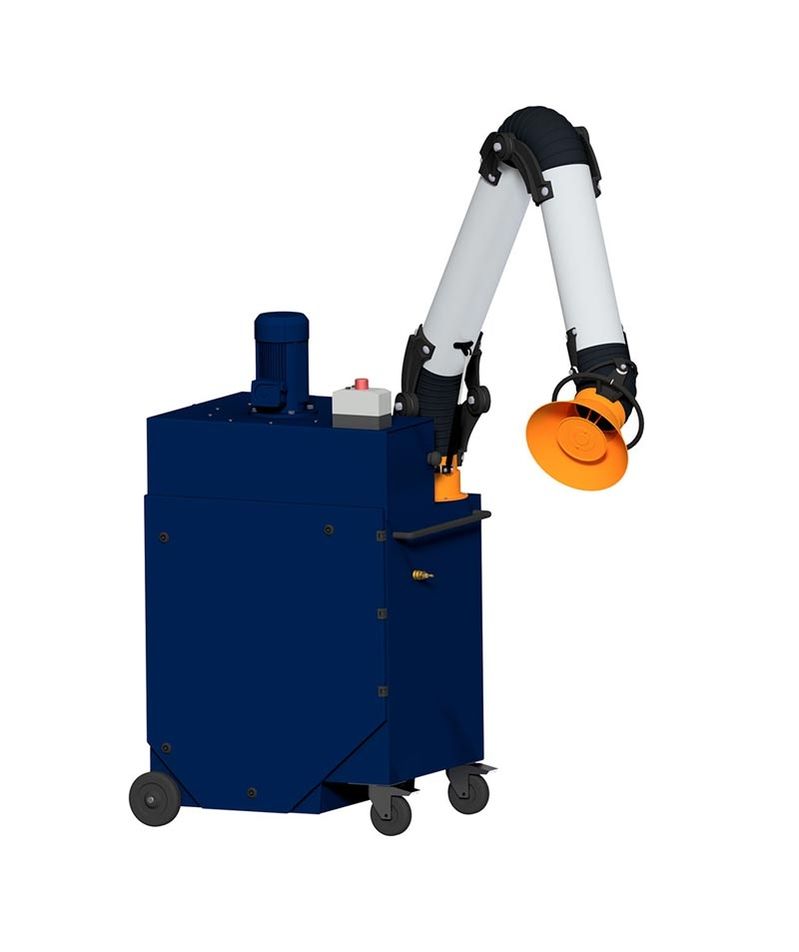
Welding fumes are far more than just a bothersome side effect of welding—they pose significant health risks. Effective extraction systems are therefore essential to ensure workplace air quality and protect your employees. At KAWEHA, you'll find high-performance welding fume extraction systems that effectively filter pollutants from the air. Whether mobile or stationary, our solutions ensure a clean and safe working environment in the metal industry and beyond.
What is welding fume and why is extraction necessary?
Welding fumes are produced when metals such as steel or stainless steel are joined together at high temperatures. This is the case, for example, with metal inert gas (MIG) welding. The fumes generated during welding contain harmful pollutants that are released into the air in minute particles. If these are inhaled, bronchitis, blood and kidney damage, or even cancer are common consequences.
To protect your employees from these risks, welding fumes must be removed from the air using an extraction system. This is even legally required. Welding fume extraction systems filter the hazardous particles directly at the source, preventing them from spreading throughout the work environment and causing damage.
Welding fume extraction system: Legal requirements
Since welding fumes are classified as hazardous substances, the use of extraction systems is legally required. The relevant regulations for regulating and controlling pollutant concentrations include, among other things:
- Occupational Health and Safety Act: Regulates the general obligations of the employer to protect employees.
- Hazardous Substances Ordinance: Specifies how to handle hazardous substances, including welding fumes.
- Technical Rules for Hazardous Substances (TRGS): Contain specific regulations for handling hazardous substances, such as TRGS 528 for welding processes and TRGS 560 for carcinogenic substances.
Extraction systems for welding fumes
Basically, there are two main types of welding fume extraction systems: stationary and mobile systems.
Stationary extraction systems are ideal for continuous operation in large production environments. These high-performance systems, such as the Dustmaster, clean large volumes of air and provide lasting protection against harmful fumes. Thanks to their modular design, they can be individually adapted to the needs of the installation site.
For more flexible applications, mobile extraction systems are the perfect solution. A mobile extraction unit is easily transportable and particularly suitable for changing workstations or use in smaller workshops. Models like our Air Champion are easy to handle and especially efficient. They extract fumes, dust, and odors directly at the source. Extraction arms can also be used. Such an extraction arm with internal joints is ideal for the precise extraction of emissions, dust, and gases in industrial areas.
Advantages of welding fume extraction
- Health protection
- Compliance with legal regulations
- Improved air quality
- Increased productivity and fewer sick days
- environmental protection
- Safe and clean workplace
Extraction system: Techniques for filtering welding fumes
KAWEHA's extraction systems utilize state-of-the-art filter technology to effectively clean welding fumes and improve workplace air quality. Whether stationary or mobile, every system is equipped with high-performance filters. Our Dustmaster (STATIONARY) is a stationary dust filtration system that impresses with filter plates, exceptional separation efficiencies, and a comparatively long service life. With an air capacity of up to 100,000 m³/h, it is perfectly suited for large production facilities, such as complex robotic welding systems. Filtration is achieved through surface filtration using filter plates that can be cleaned with compressed air.
The Air Champion (MOBIL) mobile extraction system offers greater flexibility with an air capacity of 1,200 m³/h. This system is specifically designed for manual workstations where welding fumes are generated. Both models guarantee maximum health protection through individually tailored system configurations and contribute to the effective reduction of pollutants.
Tailor-made extraction solutions for welding fumes from KAWEHA
At KAWEHA, you not only receive standardized extraction systems, but also customized solutions tailored specifically to your individual requirements. Whether you're dealing with processes involving sticky dusts, ATEX-compliant areas, or the use of oil mist separators – with our expertise, we master even the most complex challenges. Our experienced team develops the most economical and safest concept for you, ensuring a long service life. Individually tailored to the specific needs of your operation.
Contact us now for a free consultation and secure your workplace – with professional extraction technology from KAWEHA.
Frequently asked questions (FAQ)
How can welding fumes be extracted?
Welding fumes can be efficiently removed using specialized extraction systems. These systems are designed to capture the pollutants directly at the source. Extraction arms, mobile or stationary systems are used to draw in the fumes and pass them through filters. This filtration process cleans the air before it is released back into the work environment.
How does an extraction system work?
Extraction systems capture pollutants such as welding fumes directly at the source. The fumes are drawn into the system via an extraction arm or hood, where they pass through various filter stages. These filters, such as activated carbon filters, remove particles and gases from the air before it is returned clean to the work environment.
Is welding fume extraction legally required?
Absolutely: Extracting welding fumes is legally required. Regulations such as the Occupational Health and Safety Act and the Technical Rules for Hazardous Substances (TRGS) require employers to take measures to minimize their employees' exposure to harmful substances like welding fumes as much as possible.
What health risks does welding fume pose?
Welding fumes are extremely dangerous. They contain a mixture of fine particles and gases that, when inhaled, enter the lungs. In the worst case, this can lead to serious illnesses such as cancer, respiratory diseases, and kidney and liver damage. Long-term exposure of employees to these substances significantly increases the risk of chronic health problems. Welding fume extraction systems counteract these problems.
October 25, 2024
