
Hall extraction: Hall ventilation for industry & trade
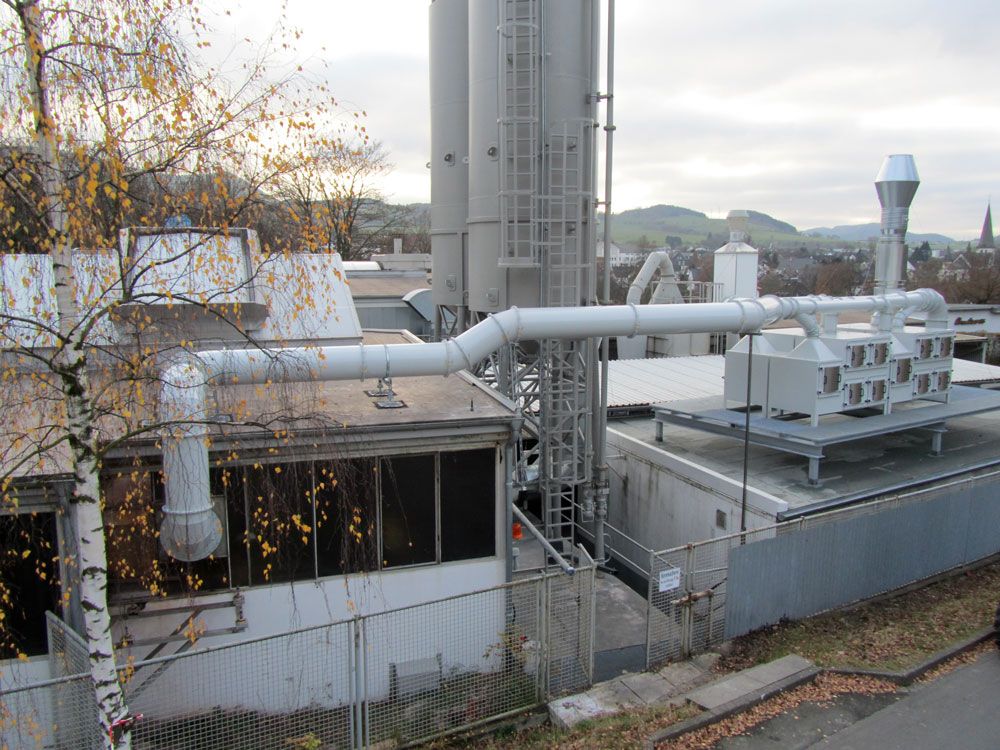
At KAWEHA, we understand the importance of clean air in the workplace. That's why we offer high-performance industrial extraction systems that reliably remove all types of dust, mist, gas, and smoke from the air. Equipped with the latest technology, our industrial extraction systems not only protect your employees and ensure consistently clean air in your facilities, but also save on energy costs through heat recovery.
Whether centralized or mobile – KAWEHA's individually planned systems create a safe and healthy working environment while meeting all legal requirements.
What is hall extraction?
Hall extraction improves air quality by removing harmful emissions such as dust, smoke, aerosols, paint mist, oil mist, gases, and vapors from the hall. It is used in production and industrial halls and primarily operates using two methods:
- Recirculation system (hall air purification):
In this process, the room air is circulated, filtered, and recirculated several times per hour. Pollutants such as fine dust or smoke are reliably removed in the process. - Supply/exhaust air system (hall ventilation):
Here, fresh air is supplied while the contaminated air is extracted. Often, the principle of displacement ventilation is used, whereby the fresh air remains near the floor, while the exhaust air is drawn off at the hall ceiling.
The advantages of hall extraction systems
- Effective protection against industrial emissions such as dust, smoke and fumes.
- Extraction of multiple workstations at constant suction power
- Heating cost savings of up to 70% thanks to heat recovery
- Improvement of employee health, production and machine longevity
- Compliance with statutory occupational health and safety regulations
- Pleasant airflow without drafts, extremely quiet.
- Adaptable to different processes
- Cost savings through high energy efficiency
- Durable products “Made in Germany”
- High separation efficiency
Centralized and decentralized hall extraction
Ventilation systems for halls are either centralized or decentralized. Both types have their own advantages and disadvantages and are suitable for different applications.
Central hall extraction
Centralized extraction systems are ideal for large production halls with numerous workstations. They effectively capture welding fumes, dust, and vapors, conveying them via a pipe system to the filter unit. These systems offer advantages such as efficient exhaust air management and the ability to recover heat energy. Disadvantages include higher investment costs, greater space requirements, and complex installation.
Decentralized hall extraction
Decentralized systems offer maximum flexibility and are therefore the perfect solution for dynamic production environments. The mobile filter towers or individual extraction units can be deployed and used at different locations. The advantage of the smaller units is their ease of installation, while maintenance is generally more complex than with centralized systems, as multiple units are often used simultaneously.
Techniques and exhaust air methods for hall extraction
Hall extraction systems utilize various technologies to improve air quality. Depending on requirements and application, the systems can therefore be individually configured. From extraction arms and hoods to heat exchangers and fresh air supply – here's an overview of the most important technologies:
Push-pull mixed ventilation
Long-throw nozzles blow the purified air into the hall ceiling, while extraction nozzles on the opposite side capture the pollutants. This efficiently mixes the often warm, pollutant-laden air in the upper part of the hall.
Push-Pull-Plus
An upgrade to the classic push-pull system: Additional air jets installed at ground level promote the upward movement of the contaminated air. This allows the air to be directed to the extraction system and filtered even faster.
Layered ventilation
The IFA-recommended method introduces fresh air through floor vents. Due to thermal effects, the air, carrying the pollutants, rises and is extracted at the ceiling of the hall. The pollutants are thus removed in a targeted manner, layer by layer.
Inverse layer ventilation
Unlike displacement ventilation, inverted displacement ventilation blows fresh air in from the top and extracts polluted air from the bottom. This method is particularly suitable for halls where many pollutants are generated near the floor.
Hall extraction using recirculated air
Recirculating air extraction systems draw contaminated air from the source – whether directly at the workstation, the ceiling, the floor, or the machinery. For cleaning, the air purifier first captures large particles in a pre-filter before the air passes through further filter stages that capture 99.995% of all harmful gases and particles. Finally, the clean air is returned to the room. Many recirculating air extraction systems also feature heat recovery, allowing you to save up to 70% on energy costs. A real advantage in terms of efficiency and cost reduction.
For optimal results, refer to the following key performance indicators:
- Airflow rate (m³/h): Describes the volume of air moved through the system per hour. It is an important indicator of the extraction system's efficiency.
- Room volume (m³): The volume of the room determines how much air needs to be processed for good air quality.
- Air circulation rate: Indicates the extent to which all the room air is filtered and cleaned. The recommended air circulation rate is at least 4-6 changes per hour.
Welding fume extraction in halls
Effective welding fume extraction in halls maintains high air quality and protects the health of employees. The complete systems can be tailored to the specific requirements of your production facility: accessories such as extraction arms, extraction hoods, or soundproof booths can be flexibly installed. Once connected, they can, for example, increase operating time or even improve the final product.
Important: Regardless of the system you choose, all welding fume extraction systems must comply with legal requirements such as the Technical Rules for Hazardous Substances (TRGS 528) and the Hazardous Substances Ordinance. Regular maintenance, contamination-free disposal of filter dust, and the integration of efficient airflow concepts such as push-pull or displacement ventilation optimize the efficiency and lifespan of the systems.
Extraction systems for halls
As an experienced supplier of effective extraction systems, KAWEHA offers a wide selection of extraction units for a variety of applications. Our products range from systems for centralized and decentralized applications to mobile units. The Oilmaster OM Reverse stands out – a true all-rounder in aerosol separation and the most powerful nuisance for oil and emulsion mist. Our other industrial air purifiers are also an excellent solution for high-performance pollutant filtration with a separation efficiency of up to 99.995%.
All systems operate in either recirculation or exhaust air mode and can also be equipped with heat recovery systems. For more demanding applications in the metalworking industry or on CNC machining centers, we also offer customized solutions – ensuring clean air and safe working conditions for your employees.
Radial fans for hall ventilation
Besides the filters, the ductwork is a crucial component of a hall ventilation system. Its function is to transport the contaminated air to the extraction unit. A radial fan ensures this process works flawlessly: acting as a vacuum generator, it guarantees that the air is extracted in a targeted manner. Modern systems often incorporate noise-dampened medium-pressure fans, which make operation pleasantly quiet and also enable high extraction performance. Furthermore, a radial fan is characterized by its high efficiency.
Hall extraction systems: areas of application
Industrial extraction systems are indispensable wherever production processes pollute the air with hazardous fine particles such as dust, smoke, or fumes. This is the case, for example, during welding in metalworking, painting in the automotive industry, or woodworking. Besides industry, industrial extraction systems are also used in the chemical, pharmaceutical, and textile industries, as well as in the recycling sector. In the food industry, these systems prevent contamination, while in the electrical industry, they efficiently remove soldering fumes.
KAWEHA: Your partner for efficient hall extraction systems
Since 1991, KAWEHA Absaugtechnik GmbH has stood for clean air in the workplace. With our many years of experience, we are your reliable partner for the planning, design, and implementation of industrial extraction systems. We develop customized solutions – from simple single-station extraction systems to complex, individually tailored installations. The best part: Our service is comprehensive, as our team supports you in all phases, from initial consultation to commissioning and maintenance.
Trust in our expertise – together we'll keep your work environment clean and safe. Contact us today and we'll implement your customized hall extraction system!
What legal requirements apply to the operation of extraction devices?
Firstly, the suction system must be approved. Secondly, it must meet international quality standards, such as ISO 13485. Clinical evidence is required to demonstrate the device's safety and effectiveness, as are precise labeling and thorough documentation. Furthermore, continuous monitoring of the device after market launch is necessary to ensure its continued proper functioning.
How does an extraction system work?
An extraction system works by capturing the contaminated air directly at its source and transporting it through a pipe system to the filter unit using negative pressure. There, pollutants such as dust, smoke, or fumes are filtered out until the cleaned air is either returned to the room or released to the outside.
Should a hall extraction system be installed inside or outside?
Whether a hall extraction system is installed indoors or outdoors depends largely on the available space, budget, and noise sensitivity. Indoor installations are space-saving and well-suited for limited areas, but result in high noise levels. Outdoor installations are significantly quieter, but require weatherproof mounting and are considerably more expensive.
When is a hall extraction system required?
A hall extraction system is necessary when various production processes in industries generate harmful dusts (e.g., dust, fine dust), particles, gases, vapors, smoke, welding fumes, and oil mist. Hall extraction systems help remove all hazardous particles from the air and ensure compliance with legal limits.
January 14, 2025
