
Hazardous substance extraction at the workplace
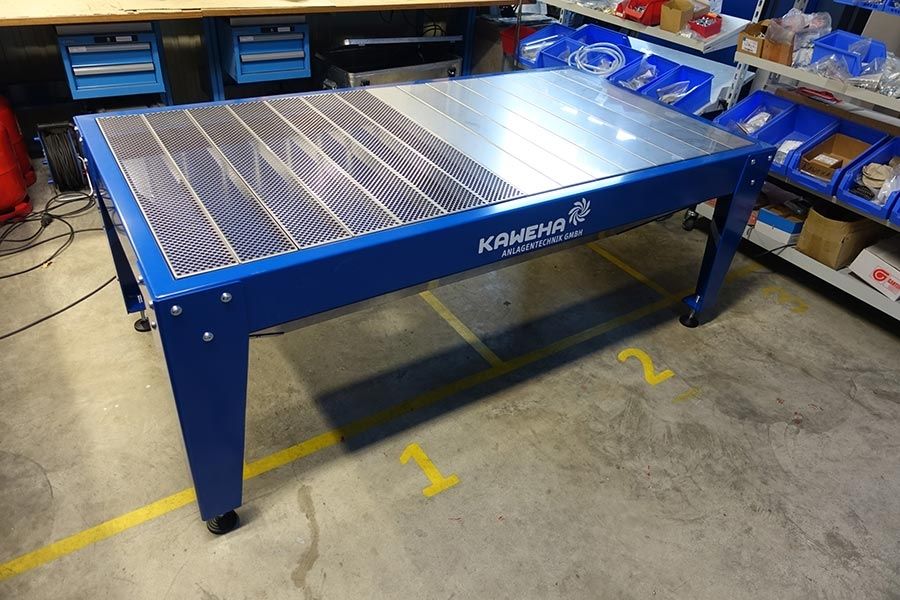
In many industries, the processing of hazardous substances generates potentially harmful emissions. Whether dust, gases, vapors, or aerosols – these pollutants contaminate the air we breathe and the environment. Legal regulations such as the Hazardous Substances Ordinance and the Technical Rules for Hazardous Substances (TRGS) therefore mandate protective measures. At KAWEHA, you will find highly developed, standards-compliant extraction systems for the safe capture and filtration of hazardous substances – for improved occupational safety, clean air, and a completely safe working environment in every hazardous materials workplace.
What are hazardous substances and why are they so dangerous?
Hazardous substances are substances or mixtures that, due to their physical or chemical properties, pose a risk to people, the environment, and machinery. These include, among others, dusts, gases, vapors, aerosols, and evaporating liquids. These substances are encountered regularly in laboratories, industries, and workshops, as they are often generated by heating, mixing, or machining materials. Without extraction, these emissions are released directly into the air: Inhaling them in high concentrations is particularly dangerous – also for the products and machinery onto which the pollutants settle. A standards-compliant extraction system is therefore essential: It captures the substances directly at their source and counteracts the hazard.
Legal requirements and limit values
Extraction systems are mandatory at workplaces where hazardous substances are present. The Hazardous Substances Ordinance (GefStoffV) and technical regulations such as TRGS 528 or TRGS 560 prescribe clear limit values for the concentration of these substances in the breathing air. Employers are therefore obligated to take appropriate measures based on a risk assessment. The so-called STOP principle dictates the sequence of steps. It stands for:
- substitution
- Technical measures
- Organizational measures
- Personal protective equipment
The effectiveness of protective measures decreases in this order. This means that technical measures such as extraction systems are generally preferable to personal protective equipment (PPE) for employees, as they are significantly more reliable and less prone to failure. PPE should therefore be seen as a supplement or a last resort when a hazard cannot be avoided otherwise. It is important to note: If hazardous substances are not extracted in accordance with standards, there is a risk of both health problems and legal consequences.
Extraction as a technical protective measure
Technical extraction systems aim to extract hazardous substances directly at their source. Every second and every centimeter counts: the closer the extraction is to the emission source, the greater the efficiency. Whether at the extraction table, at the workstation, or via point extraction on machines, modern extraction systems significantly reduce the concentration of hazardous pollutants in the air. The combination of precise capture, powerful airflow, and efficient filtration creates particularly safe working conditions.
This is the principle behind the extraction of hazardous substances.
Basically, a distinction is made between point extraction and room extraction. Point extraction draws air directly from the emission source. This is achieved, for example, with an extraction arm, an extraction table, or an integrated hood. Room extraction, on the other hand, regulates the overall air quality in the work area, but is less precise and less efficient with highly concentrated hazardous substances. However, one system does not exclude the other, as both systems can be effectively combined. Supplemented by suitable filter technologies and airflow management, they form a powerful extraction duo that can be perfectly tailored to your specific hazardous substance profile.
Increased safety: How to successfully plan at the workplace
To keep your workplace clean and safe, careful planning is essential: What hazardous materials are being processed? What is the volume of emissions? Which work processes, workpieces, or machines are involved? The selection of a suitable extraction technology is based on this information. The professional team at KAWEHA will help you find the best extraction solution for your business. We offer the following extraction systems:
- Stationary extraction system: Scores points with high volume flows and centralized capture of hazardous substances at multiple workstations. Perfect for continuous operation in a fixed location.
- Mobile extraction systems: These are designed for changing workplaces and targeted extraction. They can be flexibly deployed wherever they are needed.
Whether for gases, dusts, or vapors: KAWEHA develops the extraction solution for you that meets all operational requirements and legal regulations. For maximum protection and safety.
The heart of every system: Filter technology
The built-in filters determine the effectiveness of the extraction system. KAWEHA therefore uses the following high-performance filter systems:
- Pre-filters: Remove larger particles and often serve as pre-filters in multi-stage systems.
- HEPA filters: Achieve separation efficiencies of up to 99.995% and trap fine dust, bacteria, oil mist particles and allergens.
- Activated carbon filters: Bind gaseous pollutants, odors, solvent vapors and volatile organic compounds.
- Pocket filters: Used depending on particle size class and frequently in cases of high dust load or sticky/adherent dusts.
- ePTFE filter membrane filter plates: Specifically designed for large quantities of fine dust in continuous processes, offering maximum operational reliability combined with very long service life.
In addition, some of our extraction systems, such as the Oilmaster OM Reverse , feature multi-stage filtration that effectively separates even the finest aerosols and oil mist.
When is recirculation of air permitted?
Extraction systems either expel the filtered and cleaned air to the outside or recirculate it back into the room. The reason: Recirculating filtered air saves energy and maintains a stable indoor climate. However, this is only permitted if no carcinogenic or mutagenic hazardous substances have been released and the limit values according to TRGS (Technical Rules for Hazardous Substances) are observed. KAWEHA tests and documents all relevant parameters for each system to ensure that it operates in accordance with applicable regulations.
Our testing and maintenance service ensures your operational safety
Extraction systems must be regularly inspected and maintained to ensure their protective function is preserved. The TRGS (Technical Rules for Hazardous Substances) specifies the inspection intervals: for dusts, maintenance must be carried out at least annually, and for gases at least every three years. Maintenance at KAWEHA includes replacing filters and cleaning the extraction surfaces.
Our recommendation: Equip all systems with sensors for airflow measurement, pressure display, and filter condition monitoring so that faults or reduced performance are detected early. Effective extraction begins with proper design: The airflow must always be sufficiently strong and uniform, while the ductwork should be as short and straight as possible. Obstructions in the airflow or incorrect extraction points can drastically reduce performance.
Industry examples: Extraction systems in workshops, industry, etc.
Hazardous substances are generated in many industries: In laboratories, for example, highly reactive substances are often processed, and their vapors are dangerous even in small quantities. Workshops, on the other hand, produce a lot of dust and aerosols during grinding, milling, or welding. In industries such as the chemical, pharmaceutical, or food sectors, there are numerous applications with processes that generate significant emissions. Just as diverse as these industries are, so too are KAWEHA's extraction solutions – and, moreover, always compliant with standards and safe.
KAWEHA – Air technology solutions that protect
For many years, KAWEHA has stood for high-quality, customized extraction technology. Our extensive product range includes stationary extraction systems with high air volumes for large production areas, as well as mobile units for flexible workplaces. We also develop special systems, such as ATEX systems for explosion-proof areas or particularly sensitive hazardous materials. Whatever your needs, we create it. All our systems are robust, efficient, and easy to maintain – and on top of that, you receive expert advice from our team, including installation and comprehensive service that will impress you.
Frequently asked questions (FAQ)
When is extraction necessary at the workplace?
Workplace extraction is always necessary when hazardous substances are produced that could be inhaled or spread. Extraction systems capture these hazardous emissions, preventing them from remaining in the air.
Where should the extraction of hazardous substances begin?
Extracting hazardous substances is only effective if it is done directly at the source of release. Depending on the situation, this could be the machine, the workplace, or a container.
What should be considered when selecting an extraction system?
To find the right extraction system for your purpose, pay attention to the type of hazardous substance, the volume flow, the filter class, the workplace design and the applicable regulations.
Is welding fume extraction mandatory?
Yes, especially in the case of carcinogenic substances or exceedance of limit values according to TRGS 528/560.
October 7, 2025
