
Mobile or stationary extraction system
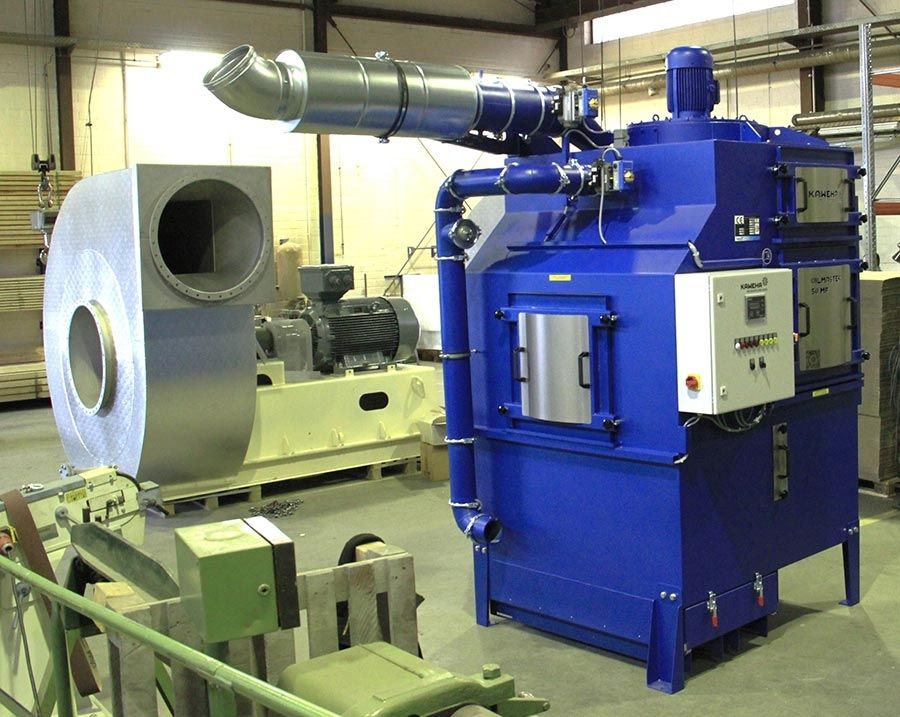
Whether welding, grinding, or woodworking: anyone working with dust, fumes, or shavings relies on a high-performance extraction system. The question is: is a mobile or stationary extraction solution the right choice? In over 80% of cases, mobile extraction units are used even though a stationary system would be technically necessary. This often results in inefficient operation, increased maintenance, rising costs, and, not least, a serious health risk. Learn here about the differences, applications, and decision-making criteria for stationary and mobile extraction systems, and how KAWEHA can support you with customized extraction solutions.
Mobile extraction systems
Mobile extraction systems are perfect for flexible use, for example, for temporary applications or changing work locations. They are easy to transport and quick to set up when an extraction solution is needed at short notice. They are also a practical solution for small workshops or individual workstations with occasional use. Mobile extraction units offer numerous advantages, especially during renovations, on-site assembly work, or as a temporary solution during conversions.
However, mobile dust extraction systems quickly reach their limits when used continuously in demanding environments. They are generally not designed for 24/7 operation, have lower suction power, and require more frequent maintenance. Therefore, their performance is often insufficient in cases of heavy dust, continuous chip generation, or intensive welding work. Furthermore, mobile units typically lack central control or filter monitoring.
Advantages of mobile extraction systems:
- Quick and flexible deployment
- Ideal for temporary workplaces
- Compact and easy to transport
- Low investment costs
Disadvantages of mobile extraction systems:
- Limited performance
- High maintenance costs
- Not suitable for continuous operation
- Lower energy efficiency and filter capacity
Stationary extraction systems
Stationary extraction systems stand for efficiency, safety, and performance – especially in work environments with constant dust or fumes. They are individually tailored to specific processes and enable centralized collection at multiple workstations simultaneously. High suction power, combined with intelligent controls and durable technology, results in trouble-free and legally compliant operation.
Stationary systems are more robust, require less maintenance, and are more energy-efficient than their mobile counterparts. They can be equipped with automatic filter cleaning, heat recovery, or ATEX-compliant safety components, making them ideally suited for industry, trade, and educational institutions. They also offer clear advantages when integrated into existing building infrastructure, such as space-saving outdoor installation or decentralized data collection points.
Advantages of stationary extraction systems:
- Powerful and durable
- Suitable for continuous operation
- Central control and monitoring
- Highest air quality and energy efficiency
- Connection of multiple workplaces possible
Disadvantages of stationary extraction systems:
- Increased planning and installation costs
- Initial investment is higher than for mobile solutions.
- Less flexible in relocation
Welding extraction & chip extraction compared
Welding produces highly hazardous particles and gases that, without extraction, can directly enter the respiratory tract of employees. Welding stainless steel, in particular, generates harmful chromium-nickel compounds that can only be captured with highly effective filtration technology. A mobile unit may suffice for occasional welding work, but a stationary unit is necessary for regular or intensive use. These systems offer significantly higher capture and filtration performance, increasing safety for both people and the environment.
Reliable extraction systems are also crucial for chip removal – for example, in metal or wood processing. Chips and grinding dust can damage machines, cause fires, or endanger employees. Stationary chip extraction systems with large collection volumes, spark-resistant technology, and automatic filter cleaning ensure consistently safe operation. Especially with continuous material processing or multiple machines, a centralized solution is more economical and sustainable than using several mobile units.
Differences between mobile and stationary extraction systems
The main difference between mobile and stationary extraction systems lies in their intended use. Mobile extraction systems are designed for short-term, flexible deployment – wherever workstations change or only occasional extraction is required. They are compact, portable, and require minimal installation effort. Stationary systems, on the other hand, are optimized for continuous operation. They deliver significantly higher performance, feature centralized controls, and are designed for long-term use.
Furthermore, the two systems differ significantly in terms of maintenance: Mobile units require regular manual cleaning and servicing, whereas many stationary systems feature automatic filter cleaning and larger collection containers. Stationary systems also offer clear advantages in terms of safety, thanks to their permanently installed technology, central filter units, and potential ATEX certifications. The choice of extraction system therefore depends heavily on the specific application scenario – a thorough needs analysis helps companies avoid follow-up costs and safety risks.
What does W3 certification mean for extraction systems?
W3 certification designates extraction systems approved for welding high-alloy steels – e.g., stainless steel. These systems have been tested for their separation efficiency by independent testing institutes and must filter at least 99% of pollutants from the welding fumes. With mobile units, the filtered air may even be recirculated back into the work area. It should be noted that mobile W3 units may only be used in mobile settings. Permanent use at a stationary workstation is prohibited according to TRGS 528.
Also important: Stationary filter systems for the extraction and filtration of chromium and nickel-containing dusts as well as any kind of carcinogenic and/or germ cell mutagenic substances must be vented to the outside in exhaust air mode.
Decision aid: When to use mobile suction, when to use stationary suction?
The choice between mobile and stationary extraction systems should never be made solely for cost reasons or short-term flexibility. Rather, it depends on the intended use, the intensity of the workload, legal requirements, and the desired future-proofing.
Mobile extraction is useful:
- For temporary deployments
- For small workshops with low dust levels
- As a supplement in hard-to-reach areas
- When frequent changes of location are necessary
Stationary suction is necessary:
- During continuous operation or high emission levels
- In production halls, schools, workshops
- To connect multiple workplaces
- Legal requirements such as ATEX
Professional advice helps avoid bad investments. KAWEHA supports you with the analysis and delivers the right solution for your extraction needs.
Custom extraction systems from KAWEHA
KAWEHA is your partner for customized extraction systems. Whether for metalworking, educational institutions, welding technology, or woodworking – we develop systems that are precisely tailored to your requirements. Our experts consider not only technical factors but also economic aspects, legal standards, and spatial constraints.
These are the services you can expect from us:
- Detailed needs analysis and consultation
- Planning and implementation of stationary or mobile extraction systems
- Solutions for welding fumes, grinding dust and chips
- ATEX-compliant technology for potentially explosive atmospheres
- Maintenance, repair and service from a single source
Stationary or mobile suction units from KAWEHA
The right extraction system is crucial for safety, efficiency, and health in the workplace. Mobile systems offer great flexibility but are often unsuitable for continuous operation. Stationary systems, on the other hand, impress with optimal performance, are more energy-efficient, and more economical in the long run. KAWEHA supports you every step of the way, from planning to commissioning your extraction system. Our solutions are customized, compliant with standards, and future-proof. Whether ATEX-compliant dust collection or efficient chip separation: with KAWEHA, you're making the right choice.
Contact us now – we'd be happy to advise you!
Frequently asked questions (FAQ)
What is important in an extraction system?
An extraction system must be adapted to the specific workplace, deliver sufficient airflow, comply with legal requirements such as ATEX, and feature high-performance filter technology. KAWEHA will gladly assist you in selecting the right extraction system for your needs.
How powerful does an extraction system need to be?
The required power of an extraction system depends on its specific application. Welding workstations, for example, require different performance than grinding workstations or chip processing machines. The suction power should always be matched to the amount of pollutants produced.
How does an extraction system work?
In an extraction system, pollutants are captured directly at their source, conveyed via pipes or flexible capture elements into the filter system, cleaned there and then either discharged to the outside or returned to the room – depending on the system design.
June 2, 2025
