
Paint mist
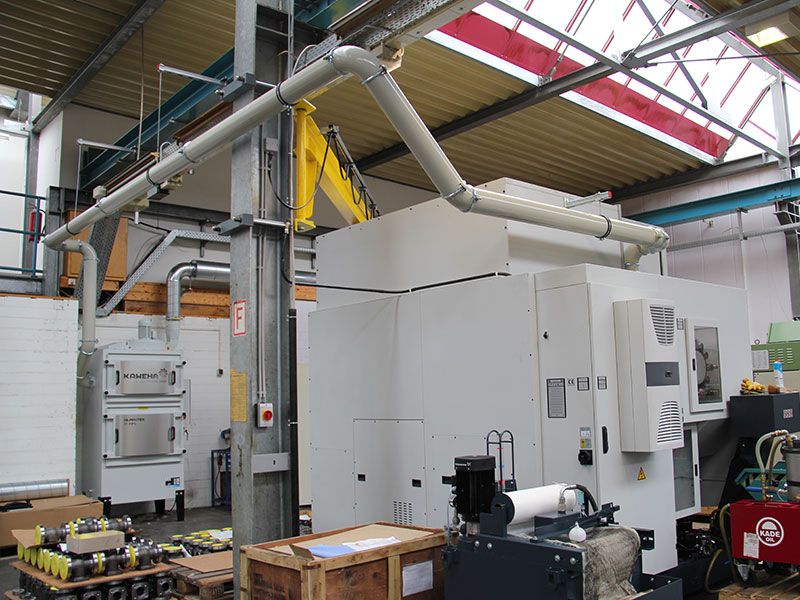
In all areas where paint, varnish, or coatings are sprayed, paint overspray is an often underestimated but serious problem. Although virtually invisible, these fine particles have far-reaching consequences: they can settle on sensitive surfaces, contaminating products, impairing machine function, or even endangering the health of employees. Without appropriate measures, paint overspray spreads uncontrollably.
Modern extraction systems are an effective solution for removing paint mist directly from the air at its source. KAWEHA develops high-quality mobile and stationary extraction systems that can be adapted to specific needs.
Color mist – what is it?
Paint mist is an aerosol mixture of finely atomized paint or varnish particles that is produced during spraying. The particles are so small that they remain suspended in the air for extended periods and spread almost invisibly. This phenomenon is typical of many common painting techniques. Examples include high-pressure and airless spraying, where the paint is applied at high speed and pressure. The composition of the paint mist always depends on the material used: solvent-based paints pose an additional risk due to harmful fumes, while water-based paints primarily focus on particle dispersal.
Risks from paint mist
Health risks from paint mist
Paint mist can have serious health consequences. The tiny particles are inhalable and reach even the finest branches of the lungs. There, they cause irritation, allergic reactions, and can even contribute to chronic respiratory illnesses such as bronchitis or asthma. If solvent-based components are involved, the danger increases even further: they can enter the bloodstream through the mucous membranes and put a strain on the central nervous system. Symptoms such as headaches, dizziness, difficulty concentrating, or long-term nerve damage are possible. These risks can only be prevented through consistent occupational safety measures, such as the use of an extraction system.
Fire and explosion hazard due to paint mist
Paint mist containing flammable components can condense in the air to form an explosive mixture. Even small sparks, hot surfaces, or electrostatic discharges are enough to cause ignition. This risk is particularly significant in enclosed paint booths or workshops with poor air circulation. To prevent fires or explosions, companies must use an ATEX-certified extraction system.
Quality losses and increased machine wear due to paint mist
Paint mist settling on freshly painted surfaces leads to uneven coatings and increases the need for rework. Machines and technical equipment also suffer: paint deposits can impair cooling, block mechanical parts, and accelerate general wear and tear. A paint mist extraction system is the first line of defense against such deposits.
Hazard assessment of paint mist
Handling paint mist in industrial and craft applications requires a careful risk assessment – not only for safety reasons, but also due to legal requirements. According to Section 5 of the German Occupational Health and Safety Act (ArbSchG), employers are obligated to systematically identify potential hazards in the workplace and implement appropriate protective measures. Paint mist, especially when spraying paints and varnishes, presents a particular challenge: it can contain flammable, irritating, or harmful substances such as isocyanates or volatile organic compounds (VOCs).
To assess the risks associated with paint mist, companies refer to the Technical Rules for Hazardous Substances (TRGS), such as TRGS 402 (for determining and assessing the hazards from inhalation exposure) and TRGS 430 (for handling sensitizing substances such as isocyanates). Additionally, the German Chemicals Prohibition Ordinance for Paints and Varnishes (ChemVOCFarbV) must be observed, which specifies clear limits for VOC content to limit environmental and health hazards from volatile substances. Technical measures such as the use of high-performance extraction systems and explosion-proof equipment are crucial for minimizing risks. Furthermore, organizational measures such as operating instructions, training, and working time regulations, as well as personal protective equipment (respiratory protection – at least P3 filter – protective clothing, gloves, and eye protection) should be implemented.
Paint mist extraction
Paint mist extraction systems draw the contaminated air right where it originates: directly at the painting point. Powerful fans are used to direct the contaminated air through multi-stage filter systems. These systems differ in various components, such as the filter medium used in wet scrubbers.
Different systems are used depending on the requirements:
- Paint mist extraction wall: This vertical system is installed in paint booths or spray booths. The wall generates a constant airflow that carries the paint mist away from the work surface to the filter wall. The cleaned air is then either returned to the room or safely vented outside. A paint mist extraction wall is particularly well-suited for continuous applications.
- Wet scrubbers: Wet scrubbers are paint mist extraction systems that use water as a carrier medium. The paint mist is drawn into a water bath via an extraction hose, where the paint particles bind. This makes wet scrubbers particularly suitable for flammable or highly concentrated paint mist.
- Mobile extraction systems: Mobile extraction solutions for paint mist score points with their flexibility. They are easy to transport and can be used at short notice at changing workplaces. They are a particularly good choice for repairs, temporary projects, or limited space.
Avoid paint overspray – these measures will help
The best way to eliminate paint overspray is to minimize its formation in the first place. The following measures help achieve this:
- Optimization of spray technology: The use of HVLP technology significantly reduces mist output and saves material at the same time.
- Correct handling: An optimal spray distance and a constant spray angle prevent the formation of unnecessary overspray.
- Good air circulation in the room: Avoiding turbulence through laminar airflows supports targeted air circulation for extraction.
- Switching on the extraction system in good time: The extraction systems should be activated even before the painting work begins.
- Regular filter checks: Only clean and functioning filters ensure consistent air quality.
Filter technology – How the separation of color particles works
Filter technology is the heart of every paint mist extraction system. Only a combination of different filter stages ensures complete air purification. Pre-filters, for example, capture coarse paint and varnish particles. They serve as the first protective layer for the subsequent filters and protect the system from contaminants. Fine filters, such as HEPA filters, are capable of filtering out even microscopic particles down to the nanoscale. The result: exceptionally high air quality. Activated carbon filters, on the other hand, absorb gaseous compounds and solvent vapors, reducing odors and making the air we breathe more comfortable.
Wet scrubbers operate without traditional filter materials. Instead, the paint mist is bound with water, which is particularly advantageous when dealing with highly flammable substances. Regular filter changes and monitoring of the system's condition are essential to maintain its efficiency over time.
Removing paint overspray: What to do about residue on surfaces?
If overspray has already settled on surfaces, professional cleaning is necessary. Depending on the type of substrate (metal, plastic, glass, paint), different agents and methods are used. Special cleaning agents that loosen the paint film without damaging the material are suitable for sensitive surfaces. Machine polishing can also be helpful for more robust surfaces. It is important that no abrasives are used that could cause scratches or streaks.
Stationary vs. mobile extraction systems – which is better?
Stationary extraction systems are suitable for large production lines or permanent paint booths. Their high performance and automation make them ideal for continuous operation. Many models feature automatic filter cleaning, digital controls, and integrated safety systems. Mobile extraction systems, on the other hand, are perfect for workshops with changing tasks. They can be easily transported to different locations and are a cost-effective solution, especially for smaller businesses or temporary jobs.
Inhaled paint fumes – the consequences
Inhaling paint fumes can have serious health consequences. In the short term, it often leads to respiratory irritation, coughing, hoarseness, or a burning sensation in the mouth and nose. Many of the solvents it contains, such as benzene or toluene, also affect the nervous system, causing drowsiness, dizziness, or nausea. Allergic reactions are also possible, for example, due to sensitizing substances like isocyanates.
In the long term, paint mist poses even more serious risks: Fine aerosols and nanoparticles penetrate deep into the lungs, can accumulate there, and lead to chronic illnesses such as pulmonary fibrosis or irreversible lung damage. In severe cases, there is a risk of permanently impaired lung function or even lung cancer. Additionally, the pollutants contained in the paint can also damage the liver, kidneys, and nervous system via the bloodstream. Particularly insidious: Even water-based paints are not harmless – their spray mist can clog the airways and impede oxygen intake.
KAWEHA – Your partner for professional paint mist extraction
With years of experience in industrial extraction technology, KAWEHA stands for individually designed systems for sustainable paint mist extraction. Our systems are characterized by high performance, energy efficiency, and durability. Whether stationary or mobile, standard solution or custom-made – we work with you to develop the right concept for your application. Comprehensive customer service, including maintenance and technical support, completes our offering. Trust KAWEHA when you value safe, clean, and legally compliant working conditions. Forget about contaminated air – contact us today!
Frequently asked questions (FAQ)
What is color mist?
Paint mist is a mixture of finely atomized paint or varnish particles that is created during spraying and spreads unnoticed through the air. It poses an invisible but real danger to people, products, and machinery.
How do you get rid of paint overspray?
The most effective way to remove paint overspray is through targeted extraction directly at the source. Overspray that has already settled can be removed with suitable cleaning agents or by polishing, depending on the surface.
Can overspray be polished away?
On smooth, durable surfaces, it is often possible to polish away paint or varnish overspray. However, you should pay attention to the correct method and suitable polishing agents to avoid damage.
Inhaled paint fumes – what to do?
If you have inhaled paint fumes, get fresh air, stay calm, and seek medical advice if you experience any symptoms. In the future, you should use appropriate protective measures such as respirators and extraction systems in industrial settings.
June 11, 2025
