
Regulations for welding fume extraction
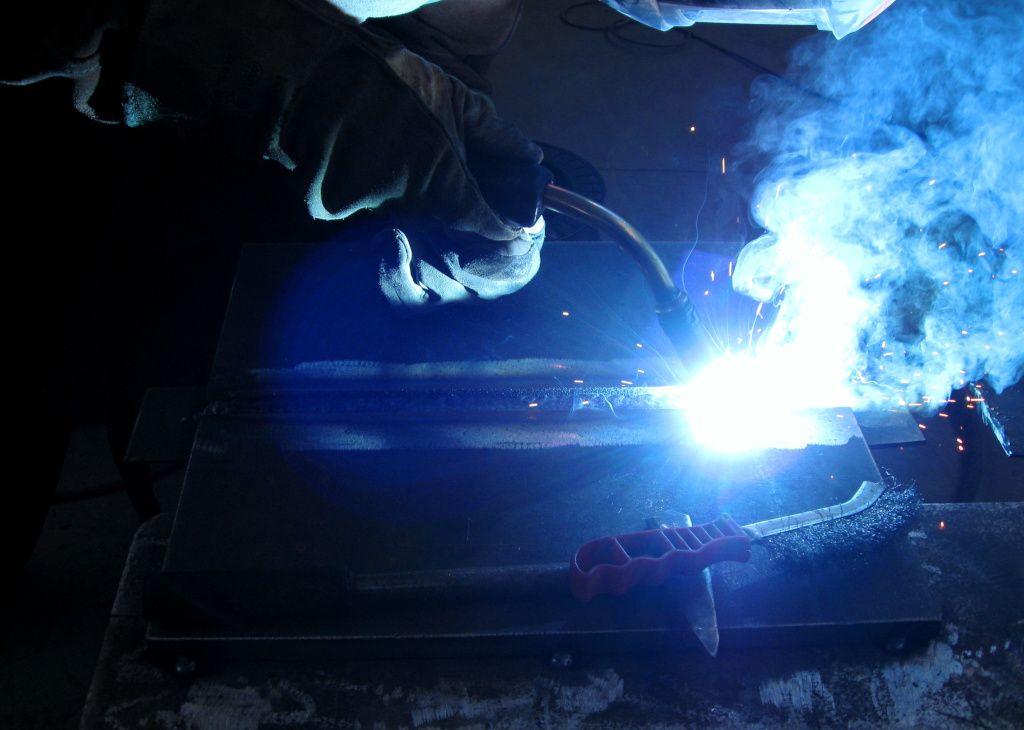
Welding produces hazardous welding fumes, which, if left unfiltered, can have potential health consequences for your employees. Prolonged inhalation of these fumes can lead to respiratory illnesses and even cancer. Extraction systems provide a solution in this case. These systems reliably filter welding fumes from the air and ensure a safe working environment. Here you will find an overview of the most important regulations regarding welding fume extraction.
What is welding fume?
Welding fumes are a dangerous mix of gases and minute particles. They are produced in industrial processes such as welding, brazing, and thermal cutting. Classified as a pollutant, welding fumes are extremely dangerous because their ultrafine particles can penetrate deep into the lungs. Prolonged exposure to these particles poses a significant health risk to workers. Depending on the type of welding and the materials used, the particles can often be smaller than 0.1 µm, making them exceptionally hazardous. Therefore, air filtration through extraction systems is absolutely essential.
Effects of welding fumes on health
Unfiltered welding fumes pose a very real danger to your employees' health. The ultrafine particles produced during welding penetrate deep into the alveoli of the lungs when inhaled. Because these particles are neither visible nor immediately noticeable, the welding dust often accumulates unnoticed in the body – with fatal consequences for health.
In the long term, this can lead to respiratory illnesses such as asthma, bronchitis, or aluminosis (metal deposits in the lungs). In the worst case, the toxic substances, for example manganese oxides or carbon monoxide, can even cause poisoning. Typical symptoms of such poisoning include dizziness, nausea, headaches, and even respiratory paralysis. Carcinogenic substances such as nickel oxide and chromium(VI) compounds are also particularly dangerous.
Extraction systems for welding fumes protect employees and improve air quality throughout the workplace thanks to modern filter technologies. KAWEHA is your partner for certified industrial extraction technology.
Welding workplace regulations for welding fume extraction in Germany
Welding fumes are classified as hazardous substances due to their harmful properties. For this reason, there are strict legal regulations in Germany governing the handling of welding fumes and the use of extraction systems, including:
- Occupational Health and Safety Act
- Hazardous Substances Ordinance
- Technical rules for hazardous substances.
This is what the most important regulations are in detail:
Occupational Health and Safety Act (ArbSchG)
With regard to welding fumes, the German Occupational Health and Safety Act (§ 5 ArbSchG) primarily aims to identify potential workplace hazards from emissions and dust and to establish appropriate protective measures. For example, a comprehensive risk assessment must always be carried out before welding work begins. The protective measures derived from this assessment should be regularly reviewed and adjusted as needed; this is the only way to ensure the long-term protection of employees' health.
Hazardous Substances Ordinance (GefStoffV)
The Hazardous Substances Ordinance (Annex I, Number 2) sets out rules for handling particulate hazardous substances such as welding fumes. Among other things, it stipulates that emissions must be extracted directly at the source to prevent them from spreading into the ambient air. Recirculating the extracted air back into the work area is only permitted after sufficient air purification.
Technical Rules for Hazardous Substances – TRGS 528
TRGS 528 ("Welding Work") further specifies the requirements for protective measures during welding. Section 4.1, for example, requires that low-hazardous-substance processes and filler materials should be selected first to minimize the generation of hazardous substances. Furthermore, ventilation measures, such as point extraction directly at the point of origin of the welding fumes, must be implemented. TRGS 528 categorizes welding processes into emission groups of low, medium, high, and very high and assigns corresponding protective measures to each group. For processes with high emissions, additional protective measures, such as the wearing of respiratory protection, are mandatory.
DIN EN ISO 15012-1
DIN EN ISO 15012-1 regulates the safety requirements for the capture and filtration of welding fumes, especially regarding the return of the cleaned air to the environment. This standard specifies the requirements for the design and testing of welding fume extraction systems.
Welding workstations with extraction systems: These workplace exposure limits apply
The general dust limit value, which was incorporated into TRGS 900 in 2014, is 1.25 mg/m³ for respirable dust, i.e., dust that can penetrate deep into the lungs. Since there is no specific limit value for welding fumes, this general limit value is used for hazard assessment. However, there are separate limit values for certain hazardous metals, such as manganese – for example, 0.5 mg/m³ for manganese compounds. These specific values are often very low; this means that compliance with these limit values automatically ensures that the general dust limit values are also not exceeded.
Mobile and central extraction systems for welding fumes
Welding fume extraction systems are generally available in two versions: mobile and stationary. Mobile systems are very flexible and can be set up directly at the workstation. Stationary systems, on the other hand, are designed for use in production facilities and often clean large volumes of air. Both types filter pollutants using special, cleanable surface filters or storage filters. It is important that these filters are replaced regularly to ensure the system continues to operate effectively. For particularly hazardous applications, such as welding chromium-nickel steels, certified special versions are required.
Advantages of welding fume extraction
- Health and safety of employees
- Improved air quality
- Optimization of working conditions
- Efficient filtration
- Easy maintenance and quick filter change of the systems
- Reduction of health risks
Proper welding fume extraction with KAWEHA
At KAWEHA, we prioritize excellent quality and legal compliance in extraction technology. Our extraction systems are specifically designed to effectively protect your employees from dust, oil mist, and other pollutants. Since 1991, we have stood for high-performance, customized extraction solutions for a healthier working environment. In other words: With our industrial extraction technology, you and your employees are always on the safe side.
Trust in our expertise and let our experienced team advise and support you at any time. Contact us today and protect yourself and your employees from welding fumes with KAWEHA's customized, legally compliant extraction technology.
Frequently asked questions (FAQ)
Is welding fume extraction mandatory?
Yes, welding fume extraction is mandatory. Legal regulations, such as the Technical Rules for Hazardous Substances (TRGS) and the Occupational Exposure Limits (OELs), stipulate that employers must take measures to protect their employees when harmful substances are produced during welding work.
Why should welding fumes be extracted?
Welding fumes contain hazardous vapors and particles that, when inhaled, can cause health problems such as respiratory illnesses or even cancer. Extracting welding fumes significantly reduces exposure to these pollutants, protects employee health, and ensures a safe working environment.
What regulations apply to welding fume extraction?
Welding fume extraction is subject to various legal regulations, including the Technical Rules for Hazardous Substances (TRGS) and occupational exposure limits (OELs). These rules stipulate which measures must be taken to keep exposure to welding fumes in workplaces as low as possible.
Which types of extraction systems are suitable?
Various extraction systems are suitable for welding fume extraction. These include torch-integrated extraction systems that draw the fumes directly from the welding torch, as well as extraction arms that can be flexibly positioned to capture the fumes at the source. Welding tables with rear-wall extraction, which direct the rising fumes directly into the filter system, are also effective. Additionally, extraction hoods that capture the fumes above the welding point are available.
What does W3 certification mean for welding fume extraction systems?
The W3 certification for welding fume extraction systems means that the system meets the highest requirements for pollutant filtration and is suitable for processing high-alloy steels such as stainless steel. This certification confirms that the extraction system filters 99% of pollutants from the air, making it effective in occupational safety. Furthermore, it allows the recirculation of the purified air back into the work area, which is permitted in Germany according to TRGS 528. The W3 certification is awarded by the Institute for Occupational Safety and Health (IFA) based on the standard DIN EN ISO 21904-1.
How can KAWEHA help with welding fume extraction?
KAWEHA develops customized extraction solutions that meet all legal requirements and are optimally tailored to your individual needs. Our experienced team supports you from consultation and selection of suitable extraction systems to installation and maintenance.
October 8, 2024
