
Soldering fume extraction
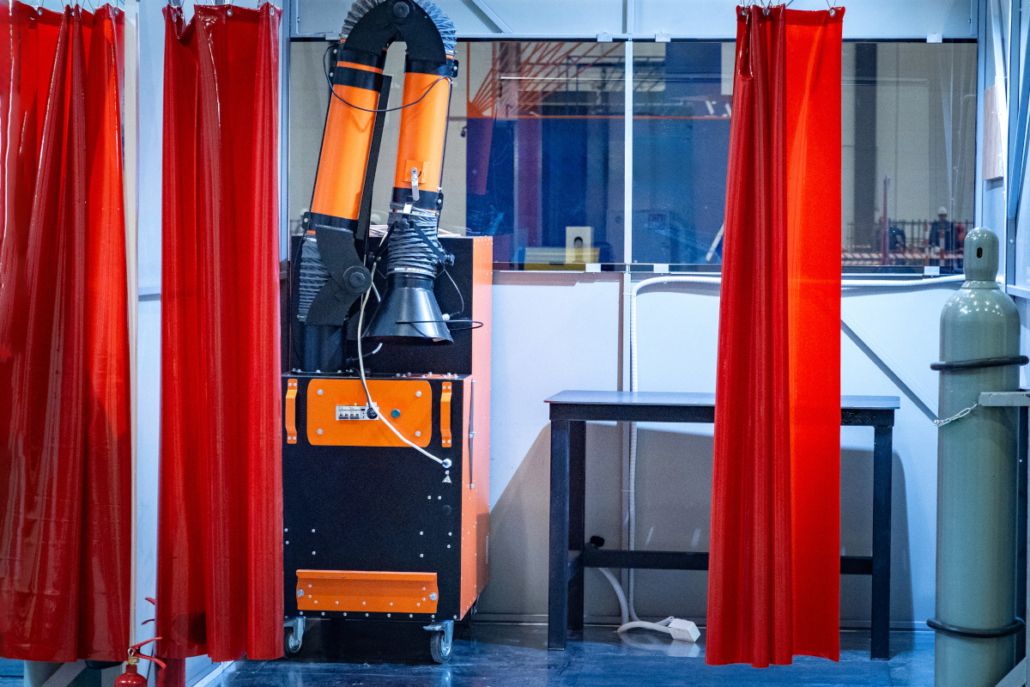
Soldering produces fumes containing harmful particles that pose a health hazard. To minimize this risk, soldering fume extractors are used: they filter the harmful soldering fumes from the air, creating a clean and safe working environment. For which applications is this extraction system suitable? What are its advantages? And how does it actually work? KAWEHA answers all your questions and helps you find the right extraction technology.
What is soldering fume extraction?
Soldering fume extraction is a process in which the fumes and harmful particles produced during soldering are extracted directly at the source. Extraction hoods capture the fumes at the source and direct them into a multi-stage filter system, where the fumes are separated from the air. This is important because soldering fumes contain toxic vapors and fine dust such as formaldehyde, heavy metals, and acids. In the worst case, these can lead to respiratory illnesses, skin irritation, or long-term lung damage. Companies using soldering fume extraction systems comply with legal occupational safety requirements and ensure the safety of their employees.
Therefore, fume extraction at the workplace is important.
A soldering fume extraction system is essential for maintaining a clean and safe workplace. These systems prevent health problems for employees and significantly improve workplace safety, as soldering fumes impair visibility and leave deposits on machines, surfaces, and floors. This causes wear and tear and increases the risk of accidents. Furthermore, legislation mandates that companies implement measures to reduce pollutants. Therefore, a soldering fume extraction system is legally required and an indispensable component of efficient daily operations.
Advantages of soldering fume extraction at a glance:
- Health protection: Prevents skin irritations, respiratory diseases and long-term lung damage.
- Improved workplace safety: Reduced accident risks through clear visibility and clean surfaces
- Compliance with legal regulations: Meets occupational health and safety laws and minimizes liability risks.
- Protection of machines and products: Reduces deposits and improves the service life of machines.
- Increased efficiency: Promotes employee well-being and boosts productivity
Soldering fume extraction: Function and areas of application
A soldering fume extraction system works by capturing the resulting fumes and the pollutants they contain directly at the source, filtering them, and then returning the purified air. The process begins with the fumes being captured by extraction arms, hoods, or nozzles positioned directly at the source. The airflow then passes through a multi-stage filtration system, which first removes coarse, harmful particles with a pre-filter. Fine dust is captured with a guaranteed 99.97% efficiency, and all gaseous pollutants and odors are effectively absorbed using activated carbon filters. After filtration, the purified air is either returned to the room or vented to the outside.
Due to their efficiency, solder fume extraction systems are indispensable in many industries. For example, they are used in the electronics industry, the automotive industry, mechanical engineering, as well as in educational institutions, laboratories, and various creative fields such as jewelry making.
Health hazards from soldering fumes
Solder fumes pose a significant health hazard that should never be underestimated. Even daily exposure of 30 minutes or more is considered problematic. This is because the pollutants and particles contained in the fumes irritate the respiratory tract, among other things, which can lead to acute symptoms such as coughing, sneezing, and breathing difficulties even after brief exposure. Prolonged respiratory irritation often results in secondary illnesses such as asthma, bronchitis, and pneumonia. Eye irritation, headaches, and skin problems such as dermatitis or acne can also occur. Certain components of the fumes, such as formaldehyde, are even considered carcinogenic and increase the risk of nasal cancer. Special caution is also advised when using lead-based solder, as prolonged exposure to lead-containing fumes can cause neurological and cognitive damage. Solder fume extraction systems ensure that this does not happen and that the air remains clean and healthy at all times.
Types of soldering fume extraction
There are different types of soldering fume extraction, each type being suitable for a specific working environment and requirements.
- Point extraction:
With point extraction, soldering fumes are captured directly at the source. Flexible extraction nozzles or arms enable precise capture of the pollutants, making it particularly efficient and suitable for individual workstations or small soldering stations. It is often used for hand soldering or microscopic soldering. - Extraction
hoods are positioned above the workstation and capture the rising fumes over a larger area. They are therefore ideal for workplaces with high soldering fume levels, such as in solder baths, during reflow soldering, or in automated manufacturing processes. - Mobile soldering
fume extraction systems are portable devices that can be used flexibly at various workplaces. They score points with their high mobility and flexibility and are ideally suited for changing work locations. - Stationary soldering
fume extraction systems consist of permanently installed systems that serve multiple workstations simultaneously. With centralized control and filter monitoring, they are ideal for large-scale production or as multi-station solutions.
Soldering fume extraction filter system
Soldering fume extraction systems keep the air clean using various filter elements and systems. They feature a pre-filter that removes coarse particles, thus protecting the subsequent filter unit. Expanded metal pre-filters are a particularly sustainable solution here, as they are easy to clean. HEPA filters of class H13 or higher, on the other hand, capture fine dust particles down to 0.3 micrometers in size, while activated carbon filters absorb both gaseous pollutants and unpleasant odors. The advantage: Modern extraction systems usually combine several filter stages to guarantee thorough air purification and maintain consistently high air quality.
KAWEHA – custom-designed extraction systems for soldering fumes and more
At KAWEHA, we offer customized soldering fume extraction systems that are safe, reliable, and efficient. Whether you need a mobile system for small workshops, a stationary system for large production facilities, or an energy-efficient or ATEX-compliant solution, we'll find what you're looking for. We draw on over 30 years of experience in extraction and air filtration technology and a high-quality range of diverse systems. Trust in our expertise and improve the air quality in your workplace today. Contact us so we can find the perfect extraction technology for you!
Frequently asked questions (FAQ)
When does the filter in a soldering fume extraction system need to be changed?
The filter in a soldering fume extraction system must be changed at least once a year. A change is also required if the permissible average workplace concentration is exceeded or if the manufacturer's maintenance schedule specifies otherwise. The compact filter should also be replaced after every tenth change of the fine dust filter.
Is solder fume extraction mandatory?
Yes, in Germany the use of a soldering fume extraction system is legally required – even for occasional soldering work. Companies must comply with the technical rules for hazardous substances (TRGS) and the occupational exposure limits (OELs).
How is soldering fume extraction regulated by law?
Soldering fume extraction is regulated by several laws. According to Section 10, Paragraph 5 of the Hazardous Substances Ordinance (GefStoffV), the extracted air must be properly recirculated. TRGS 528 "Welding Work" also applies to soldering work, and TRGS 402 provides guidelines for determining and assessing hazards from inhalation exposure. The occupational exposure limit (OEL) for fine dust is 3 mg/m³ and must be observed at all times.
March 11, 2025
