
TRGS 900 and cooling lubricants
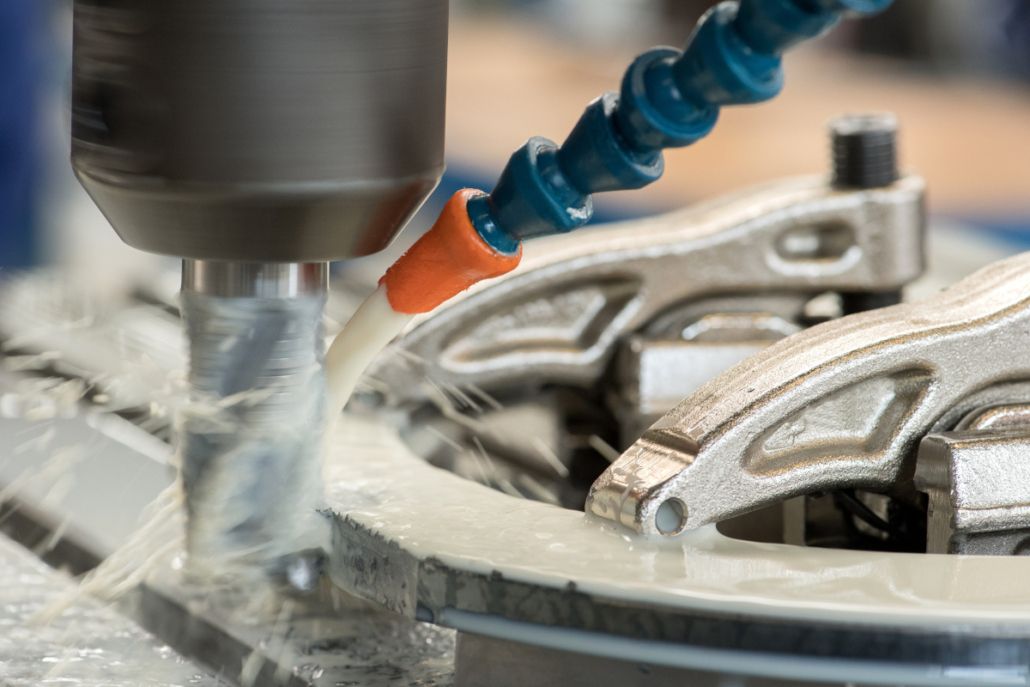
The occupational exposure limits specified in TRGS 900 are considered shift averages based on eight-hour exposure over five working days per week throughout a person's working life. For metalworking companies, these limits form the legal basis for assessing air quality at machine tools and production lines – compliance with which is ensured in practice by industrial extraction and filtration systems .
What does TRGS 900 regulate regarding cooling lubricants?
The TRGS 900 (Technical Rules for Hazardous Substances) specifies the concentration of a substance in the workplace air at which no acute or chronic health damage is to be expected.
The Committee on Hazardous Substances (AGS) regularly develops and updates this technical rule in accordance with the current state of scientific knowledge. For cooling lubricants, the limit value list specifically covers mineral oil products, hydrocarbon mixtures, and their additives.
The regulations distinguish between substance-specific occupational exposure limits for precisely defined compounds and the general dust limit for particles not otherwise regulated. Both categories are relevant for assessing cooling lubricant emissions, as cooling lubricants can occur in workplace air as both vapors and aerosols.
The Hazardous Substances Ordinance (GefStoffV) provides the overarching legal framework, while TRGS 900, as a more specific technical rule, describes the state of the art. Employers must ensure and document compliance with these limit values when working with cooling lubricants.
Relevant workplace exposure limits for cooling lubricants
For cooling lubricants, TRGS 900 contains several relevant entries. Mineral oils in highly refined form have an occupational exposure limit of 5 mg/m³ for the respirable fraction. This requirement directly applies to non-water-miscible cutting oils and grinding oil products.
Hydrocarbon mixtures that occur as solvents in metalworking fluid formulations are subject to the RCP (Reciprocal Calculation-based Procedure) according to section 2.9 of TRGS 900.
The mixture limit value is calculated based on the composition using the following group limit values:
- C6-C8 aliphatics: 700 mg/m³
- C9-C14 aliphatics: 300 mg/m³
- C9-C14 aromatics: 50 mg/m³
For water-miscible metalworking fluids, the focus of limit value considerations is on emulsifiers, corrosion inhibitors, and biocides. Ethanolamines such as 2,2′-iminodiethanol (diethanolamine), for example, have a personal exposure limit (PEL) of 0.5 mg/m³ with a note regarding dermal absorption. DGUV Regulation 109-003 supplements these substance-specific requirements with a target value of 10 mg/m³ for the total exposure from aerosol and vapor of water-miscible metalworking fluids. To reliably stay below this target value, metalworking companies install oil mist separators directly on CNC machines and production lines.
General dust limit value for metalworking fluid aerosols
The general dust limit value (ASGW) of TRGS 900 protects against non-specific impairment of the respiratory system caused by particles. The limit values are 1.25 mg/m³ for the respirable fraction (A-dust) and 10 mg/m³ for the inhalable fraction (E-dust) as shift averages.
However, the ASGW (Acceptable Limit Value) applies only to a limited extent to cooling lubricant aerosols. Section 2.4 of TRGS 900 (Technical Rules for Hazardous Substances) explicitly excludes paint aerosols from its application. For oil-containing aerosols from metalworking, experts first check whether substance-specific limit values exist for the components they contain.
A special consideration applies to substances that can exist simultaneously as vapor and aerosol. TRGS 900, section 2.10, stipulates that for substances with a vapor pressure between 0.001 Pa and 100 Pa, the sum of both phases must always be assessed. Cooling lubricants with boiling points between 180°C and 350°C typically fall into this category. Sampling must therefore capture both the gaseous and the condensed phases. Multi-stage aerosol separators capture both phases and achieve residual dust concentrations below 1 mg/m³.
Measurement and monitoring of limit values
The determination of substance concentrations in workplace air is carried out according to TRGS 402 "Determining and assessing hazards during activities involving hazardous substances: Inhalation exposure". Validated methods from the IFA (Institute for Occupational Safety and Health of the DGUV) are available for the measurement of cooling lubricant aerosols.
The designations E and A in the limit value list of TRGS 900 refer to the dust fraction to be measured:
- E (inhalable fraction): Particles up to approximately 100 µm that are inhaled through the mouth and nose.
- A (respirable fraction): Particles smaller than approximately 10 µm that can penetrate into the alveoli of the lungs.
For oil mist from machining processes, gravimetric determination of the inhalable fraction according to DIN EN 481 is recommended. The assessment index according to TRGS 402 relates the measured concentration to the occupational exposure limit. An assessment index below 1 indicates compliance with the limit value. Values above this value require additional protective measures – generally the extraction of oil and emulsion mist directly at the source.
Short-term values and exceedance factors
The occupational exposure limits specified in TRGS 900 refer to the time-weighted average of a work shift. The regulations limit concentration peaks during the workday through short-term limits with defined exceedance factors.
TRGS 900 distinguishes two categories for short-term values:
- Category I includes substances with local effects on the respiratory tract or sensitizing potential. The short-term exposure limit (SEL) must not exceed 15 minutes. For substances with instantaneous SEL marking (symbol “=”), the SEL applies at any given time.
- Category II concerns substances with predominantly systemic (absorptive) effects. The basic exceedance factor is 2. For these substances, longer exceedance periods are permitted as long as the product of factor and duration remains the same – for example, a factor of 4 for 30 minutes instead of a factor of 8 for 15 minutes.
For mineral oils and hydrocarbon mixtures from cooling lubricants, an exceedance factor of 4 typically applies in category II. A maximum of four short-term value phases per shift are permitted, with an interval of at least one hour between phases.
Skin-absorbed substances and additional hazards
TRGS 900 designates substances that can be absorbed through the skin with the letter H. For these substances, compliance with the air limit value alone is not sufficient for health protection. Skin contact with the hazardous substance must be prevented through organizational and occupational hygiene measures.
Several compounds found in cooling lubricants bear this H-marking: ethanolamines, certain corrosion inhibitors, and biocides can be absorbed into the body through the skin. TRGS 401 "Hazards from skin contact" specifies the necessary protective measures in case of dermal contact.
The TRGS 900 standard designates sensitizing substances with Sa (respiratory sensitizer) or Sh (skin sensitizer). For these substances, no scientifically established threshold values can be specified for either triggering an allergic reaction or for sensitization itself. Therefore, the concentration should be kept as low as technically possible.
Practical implementation in the workplace
Compliance with TRGS 900 requires a multi-stage safety concept when working with cooling lubricants. Substitution testing is paramount: Can more hazardous components in the cooling lubricant be replaced by less hazardous ones?
Technical measures for emission reduction target the source directly. Enclosing machine tools, optimizing coolant supply, and installing extraction systems effectively reduce the concentration of substances in the air. Capture devices according to VDI 3802 Part 2 limit the air velocity in the capture cross-section to a maximum of 4 m/s to prevent droplet dispersal.
Regular measurement of workplace concentrations documents the effectiveness of implemented protective measures. If limit values are exceeded, technical improvements must be exhausted before personal protective equipment is used. The measurement results and measures taken must be documented in accordance with the Hazardous Substances Ordinance and kept for at least three years.
Comply with workplace exposure limits: Effective extraction technology from Kaweha
TRGS 900 defines binding limit values for cooling lubricant emissions, compliance with which requires technical protective measures. Extraction systems capture oil mist, aerosols, and vapors directly at the source before the pollutants can spread throughout the work area. Thanks to multi-stage separation technology, KAWEHA oil mist separators filter over 99.99% of airborne particles.
The mobile Oilmaster Mini R ST/M, with flow rates from 600 to 1,500 m³/h, is ideal for small CNC machines. Large production halls benefit from the stationary Oilmaster OM R, which offers an extraction capacity of up to 100,000 m³/h. Both systems support compliance with workplace exposure limits according to TRGS 900 through efficient capture of coolant emissions.
Get a free consultation. Our experts will analyze your workplace situation and develop a customized extraction solution for your business.
February 2, 2026
